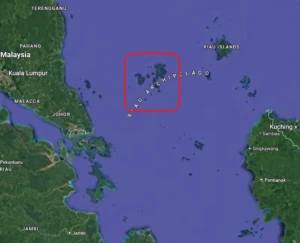
The history of the Anambas Islands spans millennia of maritime exploration, shifting alliances, and cultural exchange across Southeast Asia. Located around 300 kilometres northeast of Singapore in the Natuna Sea, the archipelago has long served as a waypoint for Austronesian seafarers, Malay sultanates, and later European trading powers seeking influence over the region often referred to as the “Spice Islands”. For a deeper contextual background, readers may view details on the broader historical setting of the islands.
Today, historians and travellers continue to uncover traces of early settlement and enduring traditions that shaped local society. From prehistoric migrations and ancient sea trade routes to colonial rule and post-independence governance, each era added another layer to the region’s identity. With improving access and conservation-led planning, the Anambas Islands are now recognised as an emerging premium and eco-conscious destination within Southeast Asia.
Pre-Austronesian and Austronesian Migrations (c. 2000 BCE – 500 BCE)
Direct archaeological evidence of early settlement in the Anambas Islands remains limited. However, regional studies suggest that pre-Austronesian or early Austronesian peoples likely visited or settled the islands as part of wider maritime migrations. Between 3000 and 2000 BCE, Austronesian ancestors travelled through the Philippines and Borneo, populating much of maritime Southeast Asia. Given their strategic position in the Natuna Sea, the Anambas plausibly functioned as a stopping point along these routes.
Early communities relied on fishing, shellfish gathering, and small-scale horticulture. Advanced navigation skills, including the use of outrigger canoes, allowed safe open-sea crossings. Linguistic research points to shared cultural practices such as root-crop cultivation and polished stone tools, elements likely mirrored in the Anambas landscape.
Early Maritime Networks (c. 500 BCE – 500 CE)
By this period, maritime trade across the South China Sea had intensified, forming what is often described as the “Silk Road of the Sea”. The Anambas Islands provided sheltered anchorages and fresh supplies for vessels travelling between Sumatra, the Malay Peninsula, and Borneo.
Trade networks facilitated the exchange of goods, technologies, and ideas. Hindu and Buddhist concepts introduced by Indian traders spread to coastal polities throughout the region. Although the Anambas are rarely named in early written sources, nearby islands reflect similar patterns of cultural diffusion. Over generations, standard sea lanes emerged as mariners mastered monsoon winds and tidal systems, reinforcing the islands’ role as a maritime refuge.
Influence of Early Kingdoms (500 CE – 1300 CE)
From the seventh century, the Srivijaya Empire dominated regional trade networks. Vessels travelling to Sumatra or the Malay Peninsula would have recognised the Anambas as reliable sources of freshwater and shelter. As Srivijaya’s influence waned, power shifted to emerging Malay sultanates and the Majapahit Empire, shaping governance, religion, and commerce across the archipelago.
During this era, long-distance trade expanded dramatically, linking Southeast Asia with the Middle East and China. These routes strengthened maritime expertise and reinforced the Anambas’ peripheral yet consistent role within regional exchange systems.
The Majapahit Era and Transition (1300 – 1500 CE)
The Majapahit Empire reached its height in the fourteenth century, exerting control over extensive trade and tribute networks. While the Anambas Islands remained on the fringes of direct administration, cultural and religious influences filtered through via merchants and passing fleets.
At the same time, Islamic sultanates centred on Malacca and Johor-Riau expanded their reach. Islamic teachings gradually blended with local customs, while older animist traditions persisted. The Anambas maintained a distinct cultural identity, shaped by Malay, Javanese, and Chinese influences.
Early Colonial Period (16th – 18th Century)
European involvement began in earnest after the Portuguese captured Malacca in 1511. Although the Anambas lacked major strategic importance, European vessels occasionally used the islands for shelter. Dutch influence followed through the Dutch East India Company, under whose nominal control the islands fell.
Direct colonial oversight remained limited. Local fishing communities continued daily life largely unchanged, although new maritime laws and monopolies disrupted established trade patterns. The appearance of clove plantings during this period reflected European demand for spices, even in remote islands.
The 19th Century and Dutch East Indies Integration
In the nineteenth century, the Anambas Islands were formally incorporated into the Dutch East Indies. Local rulers administered daily affairs under Dutch suzerainty, while steam-powered shipping reduced reliance on small island stopovers. As major trade routes shifted, the Anambas remained peripheral, noted mainly for coconut cultivation and as an occasional resupply point.
Early 20th Century and World War II
By the early twentieth century, the Anambas were a quiet outpost within the Dutch East Indies. During World War II, Japanese forces occupied much of Indonesia. Although major battles occurred elsewhere, the Anambas were used intermittently for surveillance and logistical purposes. Following Japan’s surrender in 1945, Indonesian independence movements gained momentum across the archipelago.
Post-Independence Era (1945 – 1990s)
After Indonesia’s independence, the Anambas Islands were gradually integrated into the new republic. Development progressed slowly, with fishing and coconut farming remaining economic mainstays. Infrastructure lagged behind larger centres, though incremental improvements in electricity, transport, and education emerged by the late twentieth century.
Contemporary Period and the Formation of Anambas Regency (2000 – Present)
In 2009, the Anambas Islands were designated a separate regency, granting greater administrative focus. Improved ferry routes and regional airports increased accessibility, while conservation initiatives established marine protected areas to safeguard reefs and coastlines.
Today, local communities balance traditional livelihoods with regulated tourism and environmental stewardship. Mangrove restoration, sustainable fishing, and marine conservation reflect a growing commitment to preserving the islands’ natural and cultural heritage.
Conclusion
The Anambas Islands’ history reveals a layered maritime legacy shaped by migration, trade, empire, colonialism, and nation-building. Often peripheral to major powers, the archipelago nonetheless absorbed enduring influences through centuries of seafaring exchange. The formation of Anambas Regency marked a turning point, aligning heritage preservation with sustainable development.
As the islands move forward, careful management remains essential. By uniting ecological awareness with respect for tradition, the Anambas Islands continue to chart a resilient path—one defined by adaptation, continuity, and a rich maritime past that still shapes their future.